Mr. Vikas
Pathak’s second lecture on the ‘History of Press’ centered on many aspects that
played a decisive role in our nationalist struggle against British occupation.
He first explained to us the role that print capitalism played in the creation
of ‘imagined communities’ (a concept credited to Benedict Anderson) and how
newspapers created the foundations of such a community. He then articulated the
difference between a Pre-Modern and a Modern State and the reasons for the
semi-hegemonic nature of Colonial India. Then, borrowing from Antonio Gramsci’s
theory of ‘war of position’, he gave us a synopsis of Gandhi’s book ‘Hind
Swaraj’ that chronicles the ideological struggle that he and scores of other
faced to reverse the hegemony of the State pre-independence. The lecture was
concluded with a detailed analysis of the Nationalist Press of India and how it
united the people to fight for freedom.
August 30, 2013


Media Laws (Mr. Satya Prakash)
The class lecture dealt with state functionality and
how the protection of rights provided to the citizens has to be subject to
reasonable restrictions. While the state derives its legitimacy from the
consent of individuals, it’s this very heterogeneity prevents the existence of
absolute rights for speech. Talking about free speech and it’s implied
connotations for the media, Mr. Satyaprakash discussed how the state is a
self-preserving entity, and therefore promulgates laws that seek to dissuade
dissent. While reasonable restrictions are imposed on free speech, the metric
to gauge whether the imposed restriction is reasonable or not is the ‘direct
impact’ method. Simply stated, this method ascertains whether the restriction
imposed completely hinders the very right it has presupposed to exist.
Financial Journalism (Mr. K.A. Badarinath)
The class started with a brief
introduction. Professor K.A Badrinath, is the editor of Financial Chronicle and
has previously worked with The Economic Times and The Pioneer. He commenced the
lecture by talking about Journalism. He said that Journalism was like kite
flying and required a certain realm of imagination.
He listed down the top financial newspapers,
namely, Economic Times, Financial Express, Mint, Hindu Business Line, Financial
Chronicle and Business Standard. He also stated that “Reading a business paper
is an art in itself”. Then he asked us to give our opinions on the state of
Indian economy.
Talking about the Indian
economy he stated that:
1. The Indian economy is the ninth largest
economy in the world. It’s divided between four sectors, namely, Industry,
Agriculture, Export/trade, Services.
2. It is the second largest foodgrain producer
in the world.
3. Our iron ore exports our banned. Iron ore
is converted to steel and then exported to earn higher value.
4. Our net worth in terms of
GDP is $1.87 trillion. Of which, 56.4%
is contributed by service sector,17.4% by agricultural sector and 26.4% by the
industrial sector.
5. However not even 5% of this
forms the part of world trade.
6. Our GDP is the ninth largest
as per the 2012 data.
7. India is the tenth largest
importer and the nineteenth largest exporter in the world. Export accounts for
$309 bn and import accounts for $512 bn.
8. In terms of the ease of doing
business, India is on the 192nd position which means it is very
difficult to do business in India.
9. We engage in contract
manufacturing. This means, our locally produced goods are further branded and
sold worldwide.
10. To overcome all these
problems, India first has to deal with its rural difficulties which include
illiteracy, health, poverty and infrastructure.
Some of the world’s richest
people live in India and own big business empires. Right now according to
Corporate Social Responsibility (CSR), the Business houses ought to contribute
2% of their profits towards social upliftment. However in practice, this rarely
happens.
The lecture ended on the
question, whether these business houses should come up and take initiative to
contribute towards India’s social sector projects?
Communication: Concept and Process (Ms. Parul Abrol)
Communication:
Provide an abstract
understanding of the communication process as an understanding. One can move
beyond deciphering a single event, i.e. one can apply it everywhere.
Communication
process:
1) Sender-
The sender can be an
individual, a group or an organization. The sender is responsible for sending
the message. Sender’s experience, skill, attitude, knowledge, perceptions and
culture influence the message.
2) Message-
It involves a threefold
process. Written words, oral communication, non-verbal language selected are of
paramount in ensuring the receiver interprets the message as intended by the
sender.
For example: Burnett &
Dollar.
·
The
first step is Encoding in sending the message.
·
Encoding
: - “Translating the information into a message in the form of symbols that
represent the concept.”
·
Symbols
used could be language, words, gestures, etc.
·
For
effective message and message encoding, there should be clarity on what message
needs to be sent.
·
To
transmit the message, an appropriate channel is utilized.
For example: oral or written
communication, etc.
Narendra modi writing English
Editorials.
The Message is pitched on the basis of:
a) Urgency.
b) If immediate
feedback is received.
c) If the documentation
required should be permanent.
1) Receiver:-
This involves the next step
viz. Decoding. Decoding is done by the receiver. Once the message is received
examined, the brain interprets it.
How does a receiver interprets
the message depends upon the following:
a) Skill
b) His/her knowledge on
the subject
c) Relationship between
the sender and the receiver
d) Experiences,
attitudes, perception and culture.
1) Feedback:-
The Receiver may respond in
some way and signal responses to the sender. This may be in the form of a
smile, a sign, abuses, facial gestures, etc.
·
“A
lack of response could also be a form of response”- Bovee & Thrill.
·
The
communication process is the perfect guide towards achieving effective
communication. This helps to ensure that the receiver gets the message and
understands it.
2) Barriers:-
The communication process can
be hampered by barriers.
- Inappropriate
language, incorrect grammar, inflammatory words, words that conflict with
body language, technical jargon.
- Noise and
disturbances, etc.
All these factors can distort
the message or prevent the receiver from paying attention.
Journalistic Trends (Ms. Vichitra Sharma)
Sensationalaization has nothing
to do with matured news, said by Ms. Vichitra Sharma, the veteran news editor
and journalist, here on Wednesday.
Addressing the students of the
department of English Journalism she pointed out that those media which
sensationalize the news are more or less putting false assumptions to the
reality. As the landing of India’s new fighter Super Hercules at the border of
China has never reflected any sign of conflicts or between the two countries ,
the titles such as a‘’showing of muscle’’
and ‘’India dare to China’’ were far
more exaggerated. Comparing the news headings of ‘’The Hindu’’, ‘’Hindustan
Times’’, ‘’Times Of India’’ and ‘’The Indian Express’’ among them on certain
issues Ms. Vijita indicated that when events are transformed in to news it
should not be deviated from the reality.
She added that the journalists
should keep a kind of responsibility towards the nation’s diplomatic affairs.
Stressing the importance of it, Ms. Vijitha introduced the new special cell
that has been created under the Ministry of Foreign Affairs known as ‘public
diplomacy’.
Giving conclusion for the lecture a warm
debate was also conducted on the topic ‘’Will Social Media be The Future
Platform of Journalism’’. All of the students actively participated in the
discussion. While majority of the students were of the opinion that the social
media will surely be the platform of the future journalism, others argued
against the view. They argued that, as the social media do not have a say in
media ethics and laws professional writers and think tangs are not so much
ready to come to that field. They added that social media cannot defend any
writer from being blamed or mocked by indecent utterances.
News Report (Ms. Namita Kohli)
How is news made?
News is not something that merely “happens”. It is
something that is actively “put together” by reporters, editors and publishers.
Gathering, selecting and writing news is subjective.
News Filters
In their book Manufacturing Consent: The Political
Economy of Mass Media, Noam Chomsky and Edward Herman postulate five “filters”
that determines the type of news that is presented in the media.
The five filters are –
1) The
size, concentrated ownership, owner wealth, and profit orientation of the
dominant mass-media firms.
2) Advertising
as the primary income source of the mass media.
3) The
reliance of the media on information provided by government, business, and
"experts" funded and approved by these primary sources and agents of
power.
4) "Flak"
as a means of disciplining the media.
5) "Anticommunism"
as a national religion and control mechanism. In Indian context, this religion
can be replaced with “pro markets”.
Please Note: Post September 11 WTC Attack, Chomsky and
Herman updated the fifth filter to “War on Terror or Antiterrorism” and
believed it operated in the same manner.
For detailed reading on these propaganda models or
news filters, kindly refer to:
Writing for Newspaper (Ms. Satrupa Chaudhary)
The Lecture of Ms.
Satrupa Chaudhary was on Writing for newspaper.
She started with the evolution of writing as to in what form it started,
the changes in it and in what style it is accepted now.
·
Advertisement’s
·
Book
reviews
·
News
article
·
Editorials
·
Business
letters
·
Interview
·
Movie
review
She continued with the
different forms of writing in books which included educational textbooks which
were further divided into fiction, poetry, novels and sciences, mathematics and
atlases. After books it was the social media which was
classified by writing on twitter, facebook, texts, SMS, and even the blogs.
Then the other form was the Media which had print and electronic forms in it.
Writing in newspaper is a
medium to communicate with the people or the target audience through the
different parts of newspaper articles like
·
International
/ national news
·
Local
/ metro news
·
Editorial
– letter to editor
·
Business/
financial
·
Weather
forecast
·
Sports
·
Supplements
– lifestyle , entertainment, matrimonial
At last she
concluded her lecture with the factors that affects the writing. That included
the content, the structure, the style and the deadline. For effective writing,
a writer should be careful of all these factors for effective reach of views to
the target.
August 16, 2013
The first lecture on media laws and ethics by Mr. Satyaprakash
focused on the basic duties of a reporting, during on-field reporting. In an elaborate
lecture, he said about the basic duties and rules to be followed by
reporters, that enables us to cover a complete story which makes sense and appeals to the
larger masses.
Of the many things that he explained, he said that the first
and foremost duty of a reporter includes informing the office or the editor
about the incident and seeking permission to go ahead for covering the story. On
getting a go ahead, there are several other factors that must be considered to
make the news worthwhile.
One of the first ones to follow is the 5W1H rule, which
entails covering ‘What the incident or the story is all about and where did it occur, when and why did it happen and whom all does it affect’ and how? This
ensures that the news being filed is complete in every sense and makes it to
the final print.
He continued with the lecture and talked at length about
setting an agenda for discussion and debate in the society. This however is
decided on the nature of reporting being done. For instance, only covering a
particular incident and its details falls under micro reporting. On the other
hand, covering the bigger picture related to the incident is macro reporting,
and this is what sets the tone for debates and discussions.
Journalism and journalists, more often than not, act as a
watchdog for the society. They report and cover the details pertaining to
events which go unnoticed. Investigative journalism is one such field, which
requires coming out with facts supported by proof, which otherwise would not
come to the knowledge of the common man. And for all this, it is very important
that to educate the common masses, one needs to research and research more to
mature as a journalist. And then we have the duty to entertain the masses, by
thinking and coming up with various ways in which the common man can be kept
engaged to a common social cause.
August 14, 2013
The very first lecture of the
session was with Ms. Namita Kohli on the basics of reporting. We started off by
discussing what journalism stood for. Journalism basically sought to give voice
to the “voiceless” or marginalized. In
this context it is also important to ask whose voices are we willing hear. It creates
public opinion and brings forth key debates while also acting as a watching and
empowering the citizens with information.
We next discussed what ‘news’ stood
for. NEWS basically stands for “North, East, West, South” or everything which
has any significance, a bit of drama, a surprise element, or concerns
personalities makes news. Also scandals, large scale events and proximity of an
event are important factors in determining the news. News is factual,
objective, and lacks any bias. The various areas which make news can range from
sports, crime, infrastructure, politics, legal issues, conflicts and calamities
to fashion, entertainment, celebrities and lifestyle. Inside a newsroom,
editors decide news according to its timeliness and define news as something
readers care about.
We finally concluded by
discussing how news is made. News is not something that merely “happens.” It’s
actively “put together” by reporters, editors and publishers. Gathering,
selecting and writing news is also a largely subjective matter.
August 13, 2013
The day commenced with an introductory lecture by Ms. Aditi
who told us about the inverted pyramid form of reporting and rule of 5Ws and
1H. The inverted pyramid signifies that while reporting, the most relevant
information must precede the less important details of the story. We also had a little discussion about the
major publications in India, their target audience and their influence.
The second lecture was on Communication Concepts by Ms. Parul
Abrol. She defined Communication as “all those planned and unplanned processes
through which one person influences the behavior of others.” She told us that
we interact according to certain theories as they help broaden the contours of
our understanding of communication behavior. They also help us predict and
control our communication while providing us with an abstract understanding of
communication process so that it enables one to move beyond deciphering in a
linear fashion.
The next lecture was taken by Probir Pramanik who shared his
experiences as a print journalist. He began by giving us an advice that while
writing a report, the sentences must be short and crisp as it helps hold the
attention of the reader. He said preparation study or research is a part of
life for a journalist and sources and contacts are an essential part of
journalism. While elaborating on each of these points by sustaining them with
real life examples and interesting anecdotes from his experience as a
journalist, he also remarked on some relevant facts about the media industry.
He told us about the constant conflict between the industry trends and journalistic
trends which is present due to the strong corporate lobby that enables the
corporations and politicians to plant stories. Lastly he spoke about the
newspaper’s social responsibility towards the people so that the reporter may
write ethically without instigating them.
August 12, 2013
The first lecture by Mr. K G Suresh focused on the basic fundamentals of editing. We were given a brief insight into the job of a newspaper editor and how an actual news copy is edited and made fit for publication. The lecture primarily focused on various factors which should be kept in mind while writing a good news copy.
Some of the factors which are essential for preparing a
good news copy are as follows:-
1.Being professional: The writing must be formal and crisp. But
simple and conveying the news in short.
2.Maintain reader’s attention: It should be a
good copy, useful to the reader. It should not just have an attractive headline;
the body needs to be relevant as well.
3.Presentable: The copy must have a proper layout, good
captions, headings, significant boxed items, stats and figures, boxed backgrounders,
headlines in place, sub headings, proper graphs and photographs.
4.Copy fit for publication: The final copy must be credible
as well as fit for publication.
5.Highlighting the relevant: The copy should look relevant for
the public at large, it needs to touch the core of the people.
6.Factual: Facts are sacred. So, they need to be correct. It
is very important to be cautious.
7.Selection of content: It should always touch the
target audience.
8.Sentiments should not be hurt.
9.Effective: Words, nuances, various terms that make a copy
effective must be used.
10.Bias: The copy should always be objective. An
impartial delivery is a must. A copy
must never be one sided, both versions must be addressed.
11.Error- free: It is very important for the copy to
be error free.
12.Co-ordinating.
13.Inverted pyramid structure: The most important part
of the copy must always come first.
14.Backgrounds: A brief backgrounder is important in a
copy, not just for the first time readers but also to refresh the memory of the
public.
Also, the editor should be aware of his target
audience and the news copy should be prepared accordingly. The article should
be able to engross the reader and captivate his attention throughout. The
Editor should also try to chalk out a fine balance between the demands of his
readers and the inclinations of the newspaper’s corporate ownership. A bias
towards either direction can be damaging for any news copy. Moreover, the
lecture emphasized on how having good general awareness is pivotal for any news
editor. He should be well versed with the happenings around him and portray
them accurately, whenever he is called upon to do so. We also had a discussion
about how vital it is for any editor to take an interest in all fields and
develop qualities like curiosity and inquisitiveness.
August 09, 2013
Censorship is pure political: Sanjay Kak
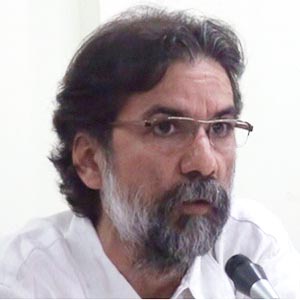
Censorship
serves no other purpose but political. That is what Sanjay Kak, an ace
documentary filmmaker said at grand finale of orientation ceremony held at Indian Institute of Mass
Communication, New Delhi. He had been invited to provide some insights to
IIMCians on documentary-filmmaking and also make them aware of the pitfalls one
has to go through being in this profession. As documentaries are usually based
on serious issues, multiplexes don’t showcase them and most of the time the
content of documentaries gets controversial thus leads to showcase-challenges.
On asking why he won’t allow censorship of controversial segment, he
emphatically answered “I would accept screening-hurdles but would never
compromise on my message.”
His lecture was tailored with the history of
documentary culture in India, also beautifully embroidered with his personal
anecdotes. Though the trend of documentary set in after WW2, it is only after
1977 that the watershed moment came with the popularity of documentaries like
Prisoners of Conscience, Waves of Revolutions by renowned documentary filmmaker
Anand Patwardhan who also happens to be his inspiration. It was Mr.
Patwardhan’s visit in his college which sowed the seeds of documentary-love in
his heart. He shared an interesting anecdote that it used to be mandatory for
movie-theatres to screen at least one documentary before projecting movie but
the trend somehow died. Though he advocated that it must be rejuvenated but
also added with the inception of internet, documentaries are actually reaching
out to people. Screening is no more a problem. There is now a good chunk of
audience interested in documentaries.
Mr. Kak ended his lecture by reiterating that
censorship isn’t pro public but political and which is why independent
filmmakers need not bend knees before politicians or extremists. If the work is
flawless and extraordinary, it will surely be recognized by audience whatever
may be the medium. If not an organized screening then an online one!
Clap with neighbors not slap: Mani

Unmindful
of earlier backbites including recent ambush and subsequent killing of five
Indian soldiers by Pakistani intruders, Congress still shies away from taking
hawkish tune against its aggressive neighbor. If one is to go by what senior
Congress leader Mani Shankar Aiyer said during orientation ceremony held at
Indian Institute of Mass Communication, New Delhi, “slap approach” as being
suggested by opposition is no solution, amicability with neighbors is
significant and which can only be brought about through “clap approach”. He
also added that exuding the zenith of patriotism, opposition might say “teach
buggers a lesson but well one has to consider that those buggers have nuclear
bombs too.”
Mr.
Aiyer separately discussed India’s relations with each of its neighbors
historically and also currently. He said that India has always shared rapport
with Bhutan which still continues with bonhomie with current king Khesar
Nagmyal. He cautioned that though India helped Nepal restore democracy in its
state but given that it is a buffer between India and China, India must be
hyper sensitive about their sensitivities. As for China, the geographical
disputes still continue. Tibet and Arunanchal Pradesh are major bone of
contentions yet economic bonding with China is strong. It is an irony that it
was India who vehemently supported and assisted in the formation of Bangladesh
yet the latter doesn’t seem to extend friendly hands.
He also
doubted at foreign policy being a Centre prerogative given the fact that state
governments increasingly and forcefully influence foreign policy stand for
their own vested interests.
To
surmise his entire lecture, India cannot afford to take a tough stand against
its rough neighbors be it Bangladesh, SriLanka or even Pakistan because being
in a globalized world it’ll take no time for small neighbors to summon in
super-powers in order to fight against their mammoth neighbor i.e. India. Thus the only way forward for
India’s Foreign Policy towards its neighbours is that
“uninterrupted” and “uninterruptable” dialogue with them doesn’t come to stall.
August 08, 2013
Profit motives are killing serious journalism: Sevanti Ninan

Indian
print-media business is in doldrums. Recently Outlook did away with three of
its magazines and Times of India closed its weekend edition named Crest.
Grappling with huge revenue deficit due to lower cover price and exorbitant
print cost, Industry is bound to bend towards advertisers. As Sevanti Ninan,
media critic and columnist said during orientation lecture held at Indian
Institute of Mass Communication, it’s profit maximizing industrial trends of
media profession which are driving the journalism trends and subsequently
taking the sheen out of business.
Earlier
media was embraced as a service. Owners used to get more concerned about people
than profit. But with the reins being handed over to second-generation, the
things have turned for worst. The management no more sees media as a service
but business. For them minting monies is the mere motive. They can go to any
extent to win high-heeled shareholders and advertisers. This
advertisement-driven or profit-driven media model has actually given a leeway
to planted news and assassinated the real journalism.
Ms.
Ninan also threw light on how English dailies like Times of India and The Hindu
are going to launch their regional versions and also entertaining supplements
in order to earn revenues and thus boost the quality of their mother-product.
To
conclude, revenue deficit in print media organizations is what ails the
industry qualitatively and ethically. As the end-product i.e. the published
paper is exceedingly cheaper than what is spent on its produce, management will
definitely look for other sources of funds. Either the overhaul in price
structure of newspaper will take place or let’s just accept that print-media
business will soon die, perhaps within 10 years to come.
Blunder of Past, Pain in Prsent: Prof Kumar
 Currently battered Indian economy is just paying the
costs of historical mistakes. To understand the concurrent economy, its
development since independence needs to be seen in a long-term perspective.
That is how Professor Arun Kumar from Jawahar Lal University saw Indian economy
and also worded his thoughts in a book named Indian Economy since
Independence: Persisting Colonial Disruption.
Currently battered Indian economy is just paying the
costs of historical mistakes. To understand the concurrent economy, its
development since independence needs to be seen in a long-term perspective.
That is how Professor Arun Kumar from Jawahar Lal University saw Indian economy
and also worded his thoughts in a book named Indian Economy since
Independence: Persisting Colonial Disruption.
Prof. Kumar made his appearance at orientation
ceremony held at Indian Institute of Mass Communication, New Delhi where he
lectured on current macro-economic challenges and also put forth historical
angles to corroborate why India chronically suffers from those challenges. He
explained that there is sentiment of slowdown in almost each industry like
automobile, realty, manufacturing and infrastructure etc. which causes
export-slowdown. As India is an import driven country and there is slump in
exports, it consistently runs Current Account Deficit which puts downward
pressure on rupee and makes it depreciate against dollar. These developments
make rating agencies like CRISIL, Standard & Poor’s etc. to downgrade
ratings thus prompt capital-flight i.e. outflow of dollars by foreign investors.
As Lack of dollars is the cause of ballooning CAD in the first place, India
gets stuck into vicious cycle. Cure for one becomes the pain for another and
cycle keeps extracting its fuel out of pains.
Why India could not break this vicious cycle, could
not turn it into virtuous one is because the country never focused on
indigenous means and ended up being the victim of external sector volatility.
The country remained work-horses, provided cheap labor to overseas manufactures
but never itself developed technologies, never worked on exploiting internal
resources
To surmise his entire lecture, historically we,
Indians failed to stay original and innovative and got increasingly dependent
on volatile foreign trade but we will have to understand that external weather
cannot be controlled so its better to develop internal resistance.
August 07, 2013
Media for conviction not convenience: Mr. Varma
 Equipping IIMCians with essentials of media profession
during orientation ceremony held at Indian Institute of Mass Communication, New
Delhi, Mr. Uday Kumar Varma, former
secretary of Information and Broadcast Ministry, said selection of pertinent
issues and presenting them in a language being understood by laymen is a must
for media professionals. Those who are driven to media with firm determination
not just out of shallow interest can only make a change, can head to north.
Thus whether to pursue Journalism by conviction or convenience...choice is of
one’s own!
Equipping IIMCians with essentials of media profession
during orientation ceremony held at Indian Institute of Mass Communication, New
Delhi, Mr. Uday Kumar Varma, former
secretary of Information and Broadcast Ministry, said selection of pertinent
issues and presenting them in a language being understood by laymen is a must
for media professionals. Those who are driven to media with firm determination
not just out of shallow interest can only make a change, can head to north.
Thus whether to pursue Journalism by conviction or convenience...choice is of
one’s own!
Mr. Varma’s informative lecture also threw light on
when the newspaper breathed first and how it grew up during the years to come.
He told that Raja Ram Mohan Roy is known as the father of press whose Samwad
Kaumaudi is the very first published newspaper on Indian soil. Newspapers were
launched during independence movements in order to make people aware of the
atrocities British inflicted on Indians. He further elaborated that in today’s
scenario; media must mould public opinion towards the good and must also arouse
some “desirable sentiments” in the hearts of readers.
His lecture was full of stories, anecdotes, poems and popular
phrases which appealed to students and teachers alike. In the end, he motivated
the students by stating that compassionate and passionate attitude is a must
for budding journalists. He rested his words by reciting following poem by
Janet Rand:
To laugh is to
risk appearing the fool. To weep is to risk appearing sentimental. To reach for
another is to risk involvement. To expose your feelings is to risk exposing
your true self. To place your ideas, your dreams before a crowd is to risk
their loss. To love is to risk not being loved in return. To live is to risk
dying. To believe is to risk despair. To try is to risk failure. But risks must
be taken, because the greatest hazard in life is to risk nothing. The person
who risks nothing does nothing, has nothing, is nothing. They may avoid
suffering and sorrow, but they cannot learn, feel, change, grow, love, live.
Chained by their attitudes they are slaves; they have forfeited their freedom.
Only a person who risks is free.
August 06, 2013
Audience-research is must for survival in profession: Mr. Cherrian

Very
soon research based campaigns will be a must for political parties to run the
current democracy consisting of vigilant audience. Not only politics,
audience-research is going to become the pre-requisite for any profession to
successfully survive. After all, before you sell, you must know who your buyers
are. That was the message what Dilip Cherrian, an image guru who owns one of
the leading Public Relations firm named Perfect Relations, conveyed through his
orientation lecture at Indian Institute of Mass Communication, New Delhi.
Mr.
Cherrian, in fact, himself began his speech with quick audience-research in
order to weave his thought-threads for the gathering sitting before him.
Sensing the changing perceptions of today’s audience, he also enumerated three
components what audience will be expecting from producers and which are
veracity, understandability and stretch. To elaborate, in the Babel of voices
around an authentic produce, easily understandable, something which stretches
knowledge-span is what will cater to the interests of emerging audience. Thus,
the crux of his entire lecture can be surmised in following words: “Slice
your audience and press the button which wins you most of them.”
Tidbits:
1)
He advised that being a budding journalist, each mass
com student has to have a say on at least three stories in a day. Not just a
verbal say but a flash on social media is also required.
2)
He defined the word ‘strategy’. The pre-requisite to
strategize is to know your enemy and then proceed with planned and healthy
combat.
3)
There is hearsay about three key components of running
a restaurant and which are location, location, location. In the vein of it,
three key ingredients for being a successful journalist is Research,
Research, Research.
Subscribe to:
Posts (Atom)